Synoptic Gospel Parallels: Second Year Greek

Ecumenical Theological Seminary

BLK 6102, Fall Semester 2026 …

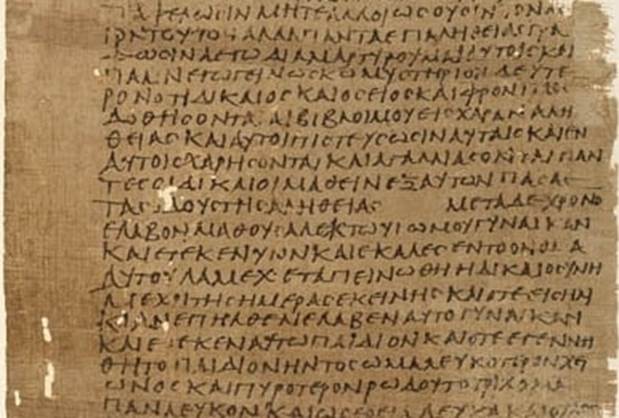
This online course will focus on developing the student’s skills in Greek grammar, syntax, rhetoric, and literary matrixing through reading and analysis of synoptic gospel parallels and theoretical arguments related to the existence Q. We will also read secondary analysis of hidden transcripts in Q as resistance to the economic exploitation and oppression of empire.

We will explore questions related to the problem of the meaning of “son of man” (surprisingly, still an unresolved and open question in academic circles today), community identity and leadership struggles in the early church, inclusive vs. exclusive ideologies in the gospels, social and cultural peculiarities for each of the gospels, racial and gender justice, and a lot more, all based on the Greek text.

One of the primary aims is for the student to have fun with inductive reading processes. We will review grammar (etc.) as needed. The professor for this course has 40+ years of formal and personal advanced studies in Classical and Koine Greek. It is assumed that before enrolling the student will have completed at least the equivalent of one year of Greek. This is a master’s degree-level course, although undergraduate students who have completed at least one year of Greek are also invited to enroll.

Audits and continuing education units (CEUs) are available for this course. As a school fully accredited by the Association of Theological Schools, all credits earned at Ecumenical Theological Seminary are transferrable at both the undergraduate and graduate levels.

The course meets Wednesdays online for 15 weeks, from 6–9:00 pm, beginning August 26.

For more information contact …

James Waddell, Ph.D.

Ecumenical Theological Seminary

jwaddell@etseminary.edu

Introduction to Faith & Labor

Ecumenical Theological Seminary

HIST 7105, Fall Semester 2026 …

In this online course we will examine the history of the labor movement in the United States, the economic, social, and political issues related to wealth disparity, exploitation, and worker (in)justice, and the response of faith to these currently pressing issues, as well as the faith community’s historical support for the working class and union organizing. We will give special attention to the lived experiences of the working class in Detroit.

This is a master’s degree-level course. Audits and continuing education units (CEUs) are available for this course. As a school fully accredited by the Association of Theological Schools, all credits earned at Ecumenical Theological Seminary are transferrable (at both the undergraduate and graduate levels).

The course meets Tuesdays online for 15 weeks, from 6–9:00 pm, beginning August 25.

For more information contact …

James Waddell, Ph.D.

Ecumenical Theological Seminary

jwaddell@etseminary.edu

AI can’t do what I do

Yesterday I brought the sacrament and prayer to an older member of my faith community who fell and broke her knee. You see, I am the called leader of my congregation and I have personal relationships with each one of our members. I listen to their joys, their sufferings, their pains, and their hopes for themselves and their loved ones. And I respond by sharing my own joys, sufferings, pains, and hopes. We live together in real-life relationships. We are present for each other. It isn’t perfect. Sometimes I forget to call someone or visit someone. But I always get around to it. AI is incapable of doing any of this.

I am also an academic. I teach and I write academic analysis based on the broad swath of history and literature I have read over my lifetime. But my teaching also includes anecdotes of my personal experiences as a faith-community leader and a human being. These anecdotes draw my students into the academic conversation because they can relate to my human experience. AI is incapable of doing any of this. Why would we ever expect it to?

Call me old-fashioned. I like to read books that are printed on pages and bound between covers. There’s something humanly present about holding a book in your hands and turning pages while you read. It’s not just another electronic blog post (lol like this one!). It’s not just another pdf document in your to-read folder. There’s something about holding a book in your hands and feeling a very real connection with a human being who wrote it. AI is incapable of doing any of this.

AI is a cheap and unrewarding, impersonal and all around crappy experience when it comes to actually working through the process of learning how to do something — learning how to read and write, learning how to improve your reading and writing, learning multiple ways to solve a math problem, learning the limitless nuances of language. AI is incapable of doing any of this.

AI can’t do what I do.

When the ruling class devours its own

“These great Cronos swallowed as each came forth from the womb to his mother’s knees with this intent, that no other of the proud sons of Heaven should hold the kingly office amongst the deathless gods.”

Every day is a new offense, a fresh hell to wake up to. Even though this image is of Peter Paul Rubens’s, Saturn devouring his son, from 1636/38, almost 400 years ago, it depicts a timeless truth from the eighth century BCE poet Hesiod, namely, the lack of restraint the wealthy and powerful think is their right in the treatment of those who are weaker than themselves, as they attack anyone and everyone, even their own, their twisted souls deem in their own minds to be a threat to their wealth and power. Following the Gatsby celebration in a certain resort in Florida with all the tacky glitter and feathers and tasteless glamour, the gleeful cruelty, promiscuity, and misogyny (yes the three go together like a monstrous antithesis to Hesiod’s three Charites), in the face of the enormous pain they are inflicting, grinding the bitter grist of their moldy bread for the masses, barely concealed beneath the flow of grapes, the gently tongued roe of sturgeon, the sweet icing of cake smeared across botoxed lips and powdered pasty cheeks, a greedy agenda with all the spite they can muster, snarling contempt for the weak rather than serving the people, this is an apropos metaphor for the foul monsters who are now ruling over us. The glitter is what they show each other as they pretend in roles to convince themselves that’s who they are. This terrifying mythic truth, this, deep down to the quick of their wretched souls, this acid sludge that pumps through their veins, is who they really are. They prove it with their actions.

The pews I used to sit in

I can feel in my memory the pews I used to sit in, the strangeness as I run my fingers along the curved hard textured surface like nothing else I might otherwise expect, faintest hints of entropy and death that seem more present more real there, the thin dank smell of aging bodies lingering on seasoned wood that echoes all the ancient sounds and rhythms of empire, conditioning the complacent and secure with weak and fragile clogged expectations of sameness, routinely gathering papered layers of tepid dullness carefully and methodically and meticulously nested to insulate against the sting … the life breathing grace of what the gospel was once given to be. “For the one who wishes to preserve his soul will lose it, but the one who loses his soul on account of me will find it.”

What in the world is happening to politics in America?

The Bible & American Politics

BST7107, Fall Term 2025 …

Have you recently found yourself wondering what in the world is happening in American politics? Do you see what’s taking place and ask yourself, what happened to the separation of church and state? What are the stakes? And how do we go about informing ourselves?

In this live online course we will examine how the bible has been used in American politics. We will begin by examining what the founding leaders of our country actually thought about the bible and its relation to their own political moment in history and how Christian nationalists distort this history. We will explore the historical roots and the many manifestations of Christian nationalism in America today, e.g., the John Birch Society, various Christian Fundamentalisms, the theonomy movement, the New Apostolic Reformation, and more.

Audits and continuing education units (CEUs) are available for this course. As a school fully accredited by the Association of Theological Schools, all credits earned at Ecumenical Theological Seminary are transferrable (at both the undergraduate and graduate levels). The course meets Wednesdays online for 10 weeks, from 6–9:50 pm, beginning September 3.

For more information contact …

James Waddell, Ph.D.

Ecumenical Theological Seminary

jwaddell@etseminary.edu

Have you ever thought about studying Greek?

Koine Greek

BL5101, BL5102, BLK6100 … Fall-Winter-Spring Terms 2025–26 …

Have you ever read a book or an article, or even watched a documentary and thought to yourself, I need to learn how to read the languages of primary sources so that I can form my own opinions, rather than rely on someone else to tell me what these sources mean? If your answer is yes, then this class is for you.

This is a three-quarter sequence (one academic year) of introductory study of Classical Greek and Koine Greek. The main objective is to build confidence and competence in the reading and consistent use of the Greek text of the New Testament as well as Greek texts from classical antiquity, the Persian, Hellenistic, and Roman periods, and late antiquity.

As a school fully accredited by the Association of Theological Schools, all credits earned at Ecumenical Theological Seminary are transferrable (at both the undergraduate and graduate levels). Audits are available for this course. Koine Greek at ETS meets Mondays online for 10 weeks (each quarter), from 6–9:50 pm, beginning September 8.

The instructor for this class, James Waddell, is a Classicist and historian of Second Temple Judaism and the New Testament. He has 40+ years of experience as a student (and instructor) of Classical and Koine Greek. He has taught at ETS since 2012.

For more information about

this course contact …

James Waddell, Ph.D.

Professor of New Testament

Ecumenical Theological Seminary

jwaddell@etseminary.edu

A Reflection on Storying Our Grief

The spirit/muse/guides wouldn’t let me rest. It was the night between the first and second days of a collaborative retreat with some academic colleagues. My thoughts kept winding around the topic of the retreat: restorying our past experiences of human struggle in order to conceive and claim personal and communal agency for hope. (My capsulation of the topic anyway.) It was an interreligious effort with a lean in the direction of Christianity.

In the context of some amazing discussions, someone mentioned the cross as an essential element of the storytelling project we were working on. In the midst of all the Christian storytelling examples and logistical discussions, mention of the cross felt like a beam of light. For many the cross is the center of the gospel, which for the most part is how many of us identify as Christians.

My teaching for the last almost 10 years has focused on the work of scholars like Edward Said, Homi Baba, Gayatri Chakravorty Spivak, Naim Ateek, Munther Isaac, Leela Ghandi, James Scott, Richard Horsley, and many others. Horsley’s prolific work on Empire criticism and the New Testament has been of particular interest to me for shaping my pedagogy in the classroom in urban Detroit. In short, it’s a way of reading the New Testament that brings out the story of human trauma of economic oppression and exploitation in first-century Roman Judea and the struggle to overcome this trauma as that story is embedded in the New Testament. In some of his works, Horsley struggles to make sense of the cross and views it as a sort of mistake of history that just happened to Jesus. I’ll come back to the cross.

Anyway, I couldn’t sleep; I was taken into a sort of Socratic self-interrogation of what the educational components of our storytelling project might look like, trying to distill the approach into what we all share together in our individual and collective human experiences. What do we all share in common, both inside and outside the church, just as human beings? It’s not social or economic status. It’s not family. It’s not education. It’s not even faith. (Insert here all the other points of human connection that can sometimes be characterized as common to our human condition.)

I can only think of one thing that binds us all together. Trauma. We all have it in some shape of form, to varying degrees, but we all share it. Conflict, struggle, loss, grief and grieving. Here the cross becomes the point of reference in the Christian story. My formal theological education happened almost 40 years ago. I learned then what I think was an important piece of my pastoral formation and approach, something Philip Melanchthon wrote in the 1530s. I’m paraphrasing but it goes something like this … human suffering is given its fullest meaning when viewed in light of the suffering and death of Christ on the cross. I struggled to understand what this meant. I applied it to other people’s lives for decades as a parish pastor. It really only became real to me personally when I experienced the unexpected death of a close family member almost five years ago. To connect all of this to our storytelling project I want to share a quote of Franz Kafka’s with you …

“I think we ought to read only the kind of books that wound or stab us…. we need books that affect us like a disaster, that grieve us deeply, like the death of someone we loved more than ourselves.”

I don’t know the precise context of Kafka’s words; they were written in a letter to one of his editors, who was probably urging Kafka not to be so morose, so scotic, in his storytelling. My way of applying this to our project is to substitute “stories” for “books” in Kafka’s appeal to his editor … “we ought to read only the kind of [stories] that wound or stab us … we need [stories] that affect us like a disaster, that grieve us deeply, like the death of someone we loved more than ourselves.” I had to repeat those words because they are so impactful for me in relation to my own traumatic loss.

The cross becomes God’s way of showing us our own humanity, to reflect our trauma back at us. To make us so appalled by the suffering of Jesus that we would never dare impose suffering of any kind intentionally in any way on another human being. It’s transformative. Paul calls it forgiveness of sins, but that’s an abstraction that I think in our American Protestant context has caused a dearth of sacred community and an over emphasis on individual “faith” and “salvation,” to the impoverishment of empathy, compassion, and acts of justice for our neighbor. The literary gospels in their presentation of the crucifixion narratives never mention “forgiveness of sins” in relation to the crucifixion. In this sense, the ending of Mark’s gospel is closer to Kafka than the others. In Mark’s gospel the women come to the tomb with the expectation of finality and decay, a monstrous space designed specifically for desiccation and absence of hope. And according to Mark’s account the women end up fleeing the tomb “because they were afraid.” Mark leaves this completely unresolved. Very Kafkaesque.

The spirit/muse/guides sent me to reflect on Sartre’s Nausea. I’m more familiar with Sartre’s No Exit, and his other philosophical works like Being and Nothingness, but when my son introduced me to Nausea several years ago, I couldn’t find my way through to the end. (One of my retirement goals is to lock myself in my library and not come out until I have finished reading this ghastly impactful work.) Sartre experienced the death of his father before he was two. In his teenage years Sartre’s mother remarried and he intentionally abandoned his relationship with his mother because of it. Trauma. Loss. Pain.

The reason I share these fragmented thoughts with you is because I am convinced that the trauma of loss is the one thing we share in common as human beings. “Healing” is overrated. Some traumas never heal. They season. They make us wiser. So, I would urge, in the power we all wield through our individual abilities to use language, to be careful not to make the overly simplistic binary connection between trauma and healing too quickly, as if it is a given. Platitudes of healing, especially the religious kind, are repulsive. They pour salt on the wound. I know this sadly from experience. And to this I must insist, some traumas never heal.

Both Kafka and Sartre, and many others we are all aware of, Nietzsche comes to mind, are honest about what I call the primal retch, the moment when the trauma is exposed, imposed on us like an unwanted, intentionally avoided load, a weight so horrible to contemplate that we wrap ourselves in petty euphemisms to convince ourselves that it could never happen. And then, all of a sudden, it does. Primal retch is the immediate, burning failure of words to make sense of what’s happened. Then the long and painful path of seasoning, of gaining wisdom, of (l)earning language that shapes the story of the experience that the retch could only point to, hearts full of grace for each other, learning wisdom that comes from the struggle of abandoning what we once thought of our (infantile) relationship with God, and embracing the dark mystery of what we don’t yet know, of what we never really knew, but now feel compelled to embrace. The seasoning, the wisdom, the courage as well as the encouragement, and if we must say it, healing, that comes through telling our stories.
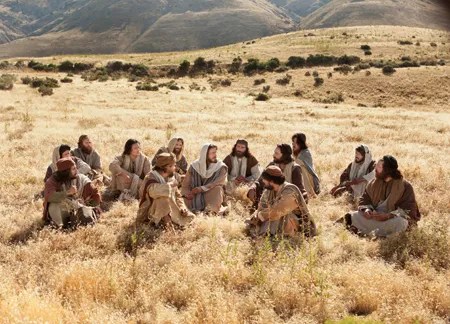
Postcolonial Bible

BST7101, Spring Term 2024 …

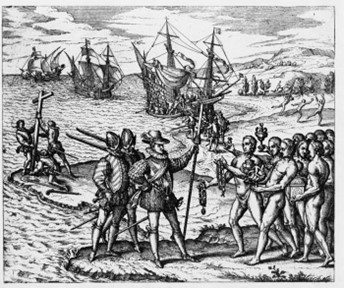
This online course addresses the reality that most readings of the Bible today are shaped by white, male-dominant, Eurocentric perspectives and critical methodologies. We will read the history of colonizing biblical interpretations from multiple perspectives in the writings of some of the most important postcolonial figures like Spivak, Fanon, Dube, Khalidi, Said, Scott, Segovia, Sugirtharajah, and others. And we will define postcolonial readings of the Bible in our own urban contexts. This course will also address colonizing interpretations that drive geopolitical concerns in the Middle East, in particular the Palestine-Israel conflict. Audits and continuing education units (CEUs) are available for this course. As a school fully accredited by the Association of Theological Schools, all earned credits are transferrable (at both the undergraduate and graduate levels). The course meets Thursdays online for 10 weeks, from 6–9:50 pm, beginning March 21.

For more information contact …

James Waddell, Ph.D.

Ecumenical Theological Seminary

jwaddell@etseminary.edu

The assault on affirmative action and human equality

The (not so) supreme court’s unsophisticated and ignorant appeal to racial “colorblindness” in order to strike down (once again) decades of legal precedent for affirmative action and replace it with their plutocratic predilections, amounts to nothing less than an institutional recognition of the bigoted approach of “I choose not to see you.” See how easy it is now to shore up systemic racist inequality.